
Umrah Guide
Salah al-Ihram
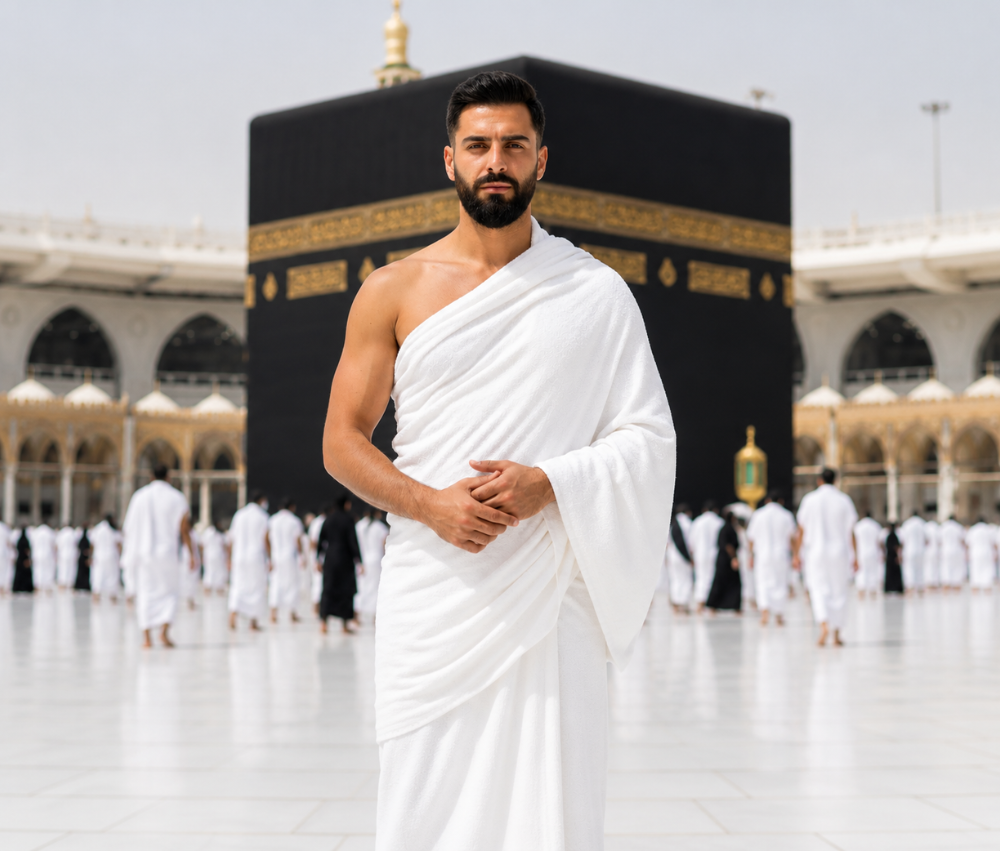
Before entering the sacred state of Ihram, it is Sunnah to perform two Rak’ahs of Nafl Salah. You can offer this prayer after wearing your Ihram at the airport or during your flight before crossing the Miqat, provided prayer facilities are available.
How to Perform Salah al-Ihram

covered during the prayer.
First Rak'ah: Surah Al-Kafirun (Surah 109)
Second Rak'ah: Surah Al-Ikhlas (Surah 112)
your Umrah and make your journey easy.
Niyyah (Intention) for Umrah
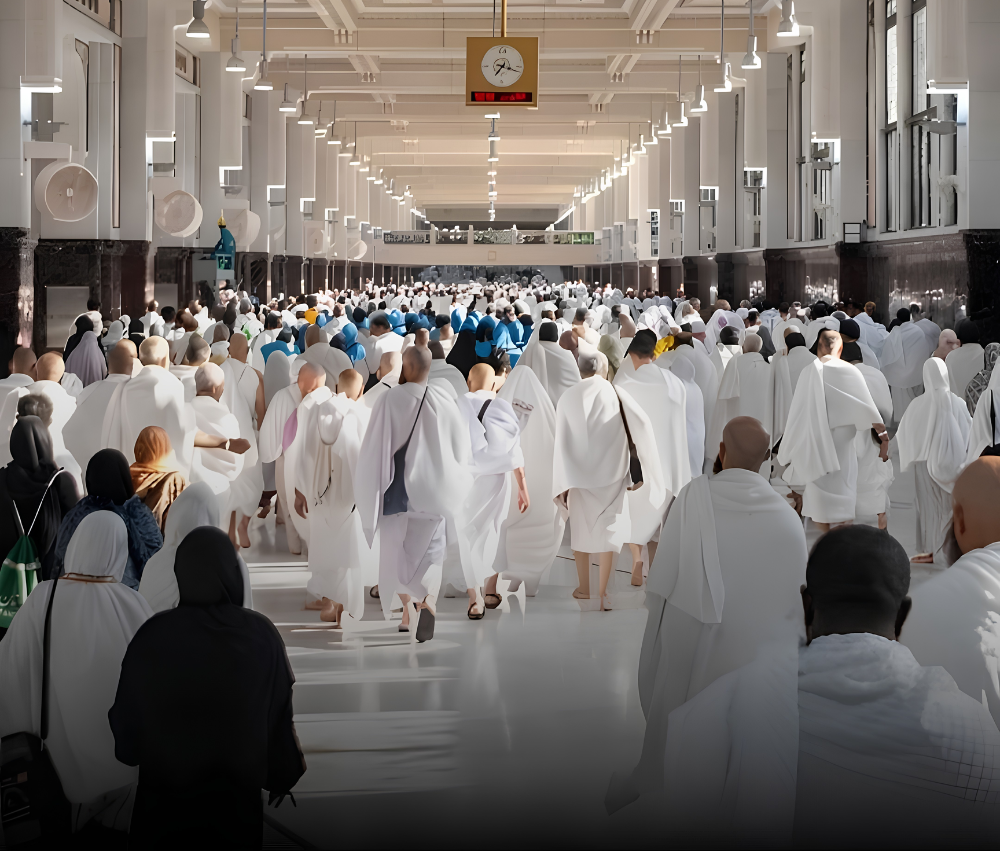
The Niyyah (intention) for Umrah should be made at the Miqat or just before crossing it. It is recommended to delay your intention until the last possible moment so that the restrictions of Ihram begin only when necessary.
You should make the intention both in your heart and verbally.
لَبَّيْكَ اللَّهُمَّ عُمْرَةً
Labbayka Allahumma 'Umratan
Translation: O Allah, here I am to perform Umrah.
اللَّهُمَّ إِنِّي أُرِيدُ الْعُمْرَةَ
Allahumma inni ureedul 'Umrah
Translation: O Allah, I intend to perform Umrah.
اللَّهُمَّ إِنِّي أُرِيدُ الْعُمْرَةَ فَيَسِّرْهَا لِي وَتَقَبَّلْهَا مِنِّي
Allahumma inni ureedul 'Umrah fa yassirha li wa taqabbalha minni
Translation: O Allah, I intend to perform Umrah. Make it easy for me and accept it from me.
Talbiyah
After making your Niyyah, recite the Talbiyah to officially enter the state of Ihram.
According to the Hanafi and Maliki schools, reciting the Talbiyah is Wajib, while the Shafi’i and Hanbali schools consider it Sunnah. It should be recited at least once after making the intention. Without it, the Umrah is not considered valid according to the Hanafi position.
Talbiyah
لَبَّيْكَ اللَّهُمَّ لَبَّيْكَ، لَبَّيْكَ لَا شَرِيكَ لَكَ لَبَّيْكَ، إِنَّ الْحَمْدَ وَالنِّعْمَةَ لَكَ وَالْمُلْكَ، لَا شَرِيكَ لَكَ
Labbayka Allahumma Labbayk, Labbayka La Sharika Laka Labbayk. Innal Hamda Wan Ni’mata Laka Wal Mulk, La Sharika Lak.
Translation:
“Here I am at Your service, O Allah, here I am. Here I am, You have no partner, here I am. Surely all praise, blessings and dominion belong to You. You have no partner.”
After Reciting the Talbiyah
Masjid al-Haram and are about to begin Tawaf.

Entering Makkah
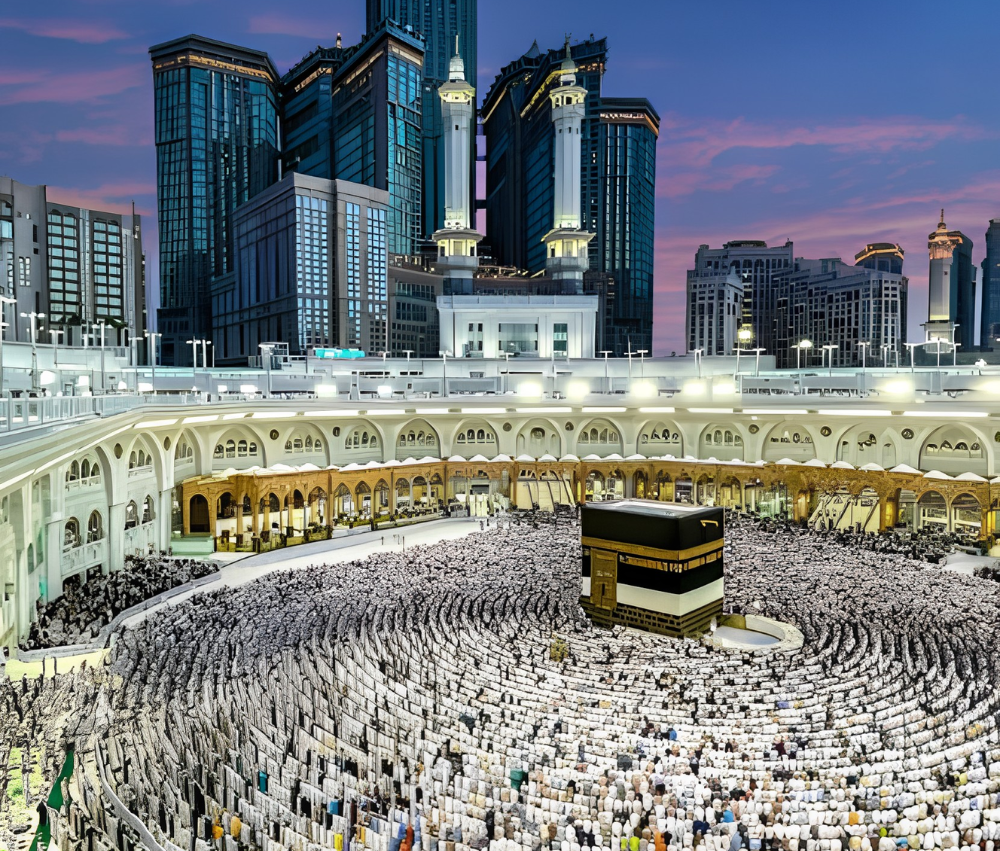
As you enter the sacred boundary (Haram) of Makkah, continue reciting the Talbiyah, engage in Dhikr, and send abundant Salawat upon Prophet Muhammad ﷺ.
Dua for Entering the Haram
اللَّهُمَّ هَذَا حَرَمُكَ وَأَمْنُكَ، فَحَرِّمْنِي عَلَى النَّارِ، وَآمِنِّي مِنْ عَذَابِكَ يَوْمَ تَبْعَثُ عِبَادَكَ، وَاجْعَلْنِي مِنْ أَوْلِيَائِكَ وَأَهْلِ طَاعَتِكَ
Allahumma haza haramuka wa amnuka fa harrimni alan naar, wa aminni min azabika yawma tab'athu ibadak, waj'alni min awliya'ika wa ahli ta'atik.
Translation: "O Allah, this is Your Sacred Sanctuary and Your place of security. Protect me from the Fire, keep me safe from Your punishment on the Day You resurrect Your servants, and make me among Your righteous friends and those who obey You."
Entering Masjid al-Haram
Entering Masjid al-Haram is one of the most emotional and spiritually rewarding moments of your Umrah journey.
It is Sunnah to enter through Bab al-Salam (The Gate of Peace) whenever possible. If this entrance is not accessible, you may enter through any other gate.
Sunnah Etiquette for Entering the Haram
Dua for Entering the Mosque
بِسْمِ اللهِ، اللَّهُمَّ صَلِّ عَلَى مُحَمَّدٍ، اللَّهُمَّ اغْفِرْ لِي وَافْتَحْ لِي أَبْوَابَ رَحْمَتِكَ
Bismillah. Allahumma salli ‘ala Muhammad. Allahummaghfir li waftah li abwaba rahmatik.
Translation:
“In the name of Allah. O Allah, send blessings upon Muhammad ﷺ. O Allah, forgive me and open for me the doors of Your mercy.”
Another Recommended Dua for Entering the Moosque
أَعُوذُ بِاللَّهِ الْعَظِيمِ، وَبِوَجْهِهِ الْكَرِيمِ، وَسُلْطَانِهِ الْقَدِيمِ، مِنَ الشَّيْطَانِ الرَّجِيمِ
A’udhu billahil ‘Azim wa bi wajhihil Karim wa sultanihil qadim minash shaytanir rajim.
Translation:
“I seek refuge in Allah, the Most Great, in His Noble Face and His Eternal Authority from the accursed Satan.”
Tahiyyatul Masjid
If you intend to perform Tawaf immediately, there is no need to offer Tahiyyatul Masjid, as your Tawaf serves as the greeting of Masjid al-Haram.
If you are not planning to perform Tawaf right away, you may offer two Rak’ahs of Tahiyyatul Masjid.
Note: Inside Masjid al-Haram, it is permissible to walk in front of people offering Salah when necessary. However, you should avoid crossing directly through the area where they are making Sujood (prostration).
First Sight of the Kaaba
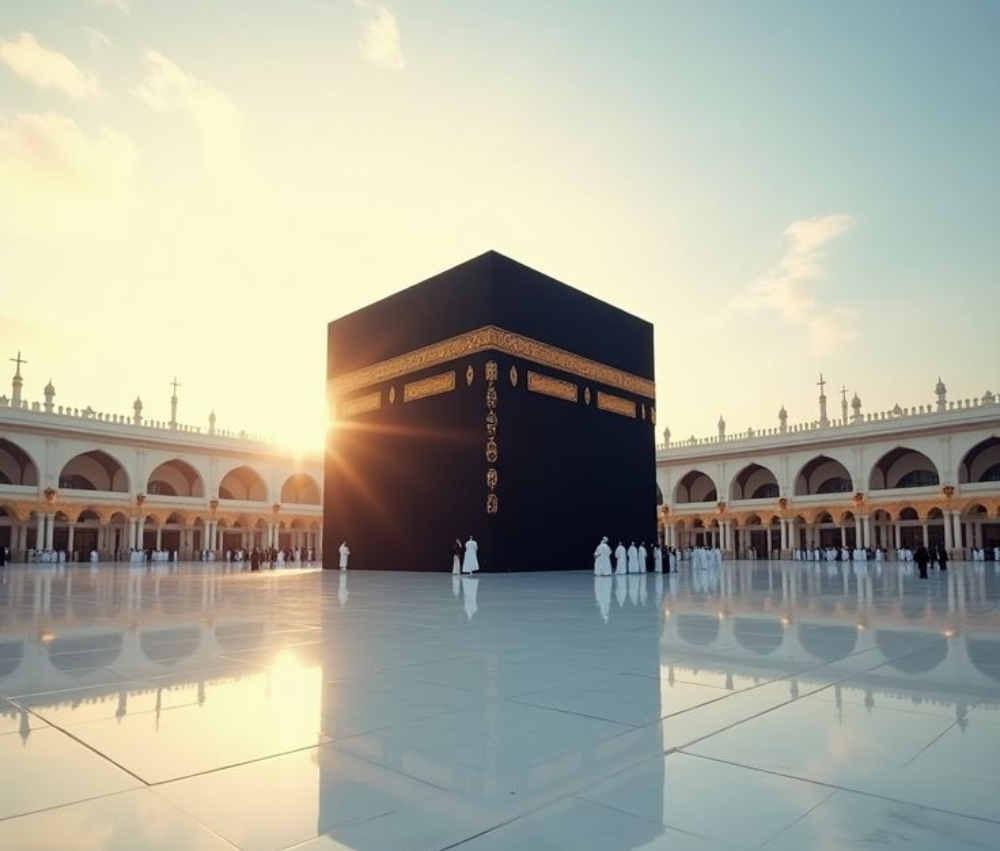
The first glimpse of the Holy Kaaba is one of the most blessed moments of your life.
When you see the Kaaba for the first time:
Many scholars mention that this is among the blessed occasions where Dua is especially accepted.
Recite Three Times
اللَّهُ أَكْبَرُ، اللَّهُ أَكْبَرُ، لَا إِلٰهَ إِلَّا اللَّهُ
Allahu Akbar, Allahu Akbar, La ilaha illallah.
Translation:
“Allah is the Greatest. Allah is the Greatest. There is no deity worthy of worship except Allah.”
Recommended Duas
O Allah, increase this House in honour, dignity, respect and reverence. Increase those who honour it through Hajj and Umrah in faith, righteousness and piety.
O Allah, You are As-Salam (The Source of Peace), and peace comes only from You. Grant us peace in this life and the Hereafter.
Tawaf al-Umrah
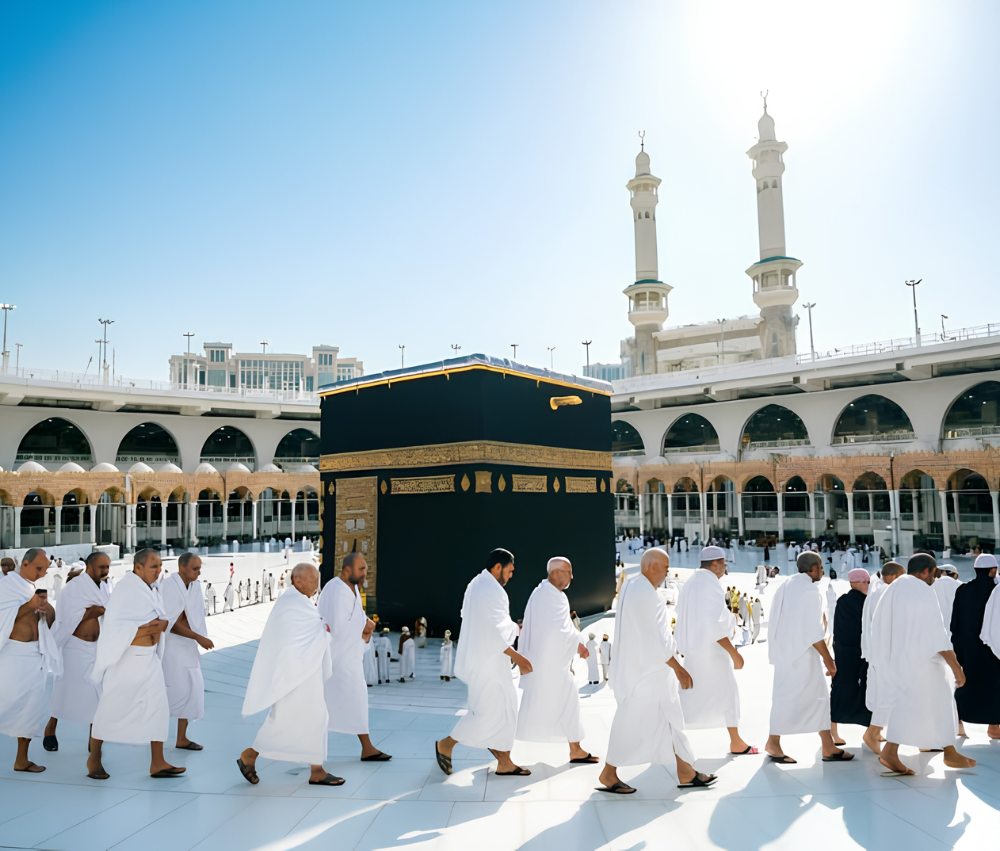
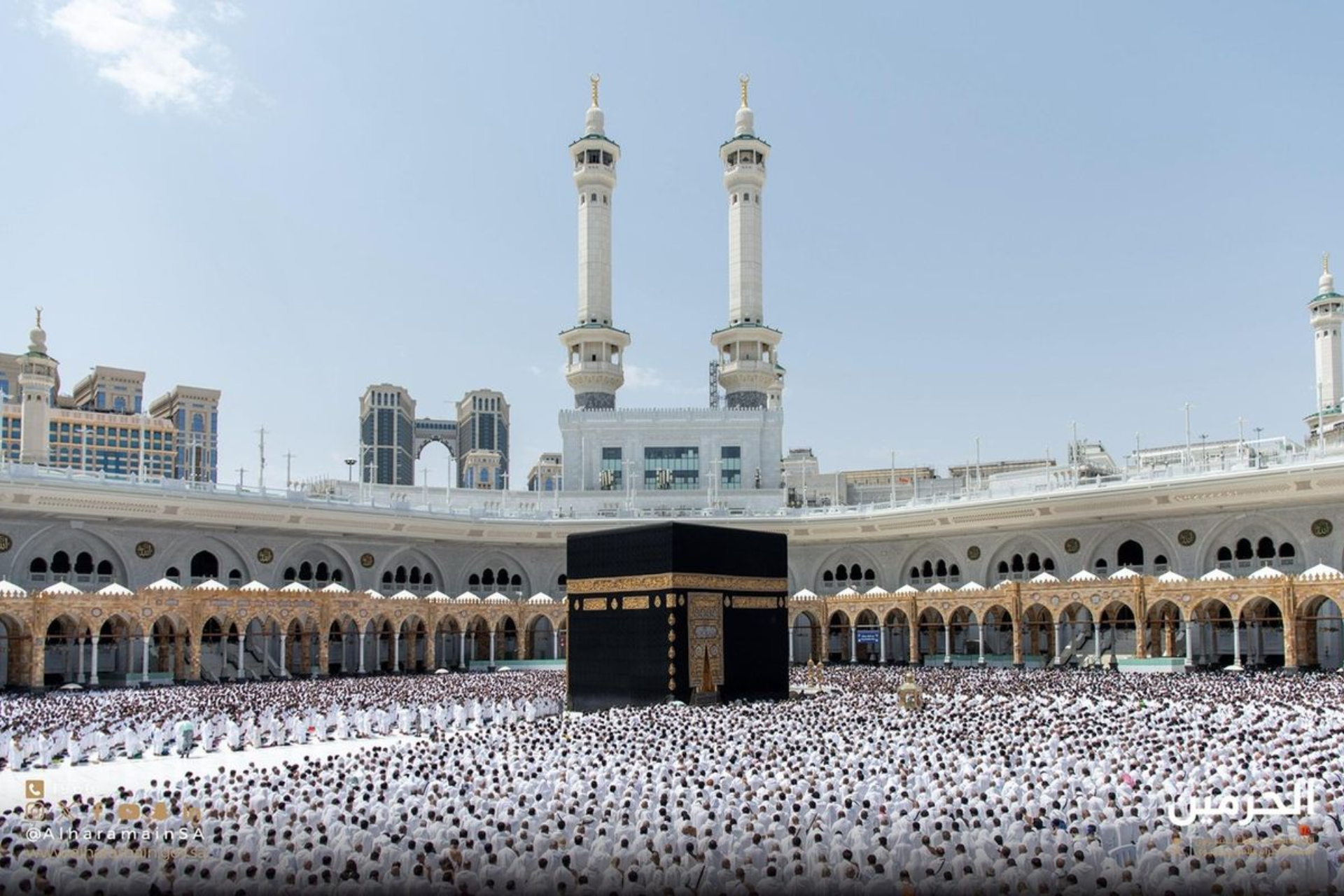
Tawaf is one of the essential pillars of Umrah. It consists of seven anti-clockwise circuits around the Holy Kaaba while remembering Allah ﷻ.
Conditions for a Valid Tawaf
For your Tawaf to be valid, the following conditions should be fulfilled:
- Perform the Tawaf yourself.
- Make the intention (Niyyah) for Tawaf.
- Complete the Tawaf within Masjid al-Haram.
- Be in a state of Wudhu and free from anything requiring Ghusl.
- Ensure the Awrah is properly covered.
- Begin from Hajar al-Aswad (The Black Stone).
- Walk in an anti-clockwise direction.
- Stay outside the Hatim (Hijr Ismail).
- Walk on foot if physically able.
- Complete seven full circuits.
- Offer two Rak’ahs of Salah after completing Tawaf.
Preparing for Tawaf
Before starting Tawaf:
- Ensure you are in a state of Wudhu.
- Men should perform Idtiba, uncovering the right shoulder by passing the upper Ihram cloth under the right armpit and placing it over the left shoulder.
- Focus your heart on worship, remembrance and sincerity.
Starting Point of Tawaf
Begin your Tawaf at the corner of the Kaaba where Hajar al-Aswad (The Black Stone) is located.
How to Identify the Starting Point
- Stand in line with Hajar al-Aswad.
- The Black Stone should be on your right side.
- A green light on the wall of Masjid al-Haram marks the starting point of every circuit (Shawt).
- Face the Kaaba and make your intention before beginning the first circuit.
From this point, begin walking in an anti-clockwise direction while remembering Allah ﷻ and maintaining humility throughout your Tawaf.
Intention (Niyyah) for Tawaf
Before beginning your Tawaf, make a sincere intention in your heart. You may also recite it verbally.
Dua
اللَّهُمَّ إِنِّي أُرِيدُ الطَّوَافَ بِالْبَيْتِ الْحَرَامِ فَيَسِّرْهُ لِي وَتَقَبَّلْهُ مِنِّي
Translation:
“O Allah, I intend to perform Tawaf of the Sacred House. Make it easy for me and accept it from me.”
Starting the Tawaf
After making your intention:
circuit and it must be repeated
Raml (Brisk Walking)
Raml is a Sunnah for men during the first three circuits of Tawaf.
How to Perform Raml
- Walk briskly with short, confident steps.
- Keep your chest upright and move with dignity.
- Women do not perform Raml.
If the Mataf is crowded, do not push or inconvenience other pilgrims. In such situations, walk normally, as protecting fellow Muslims takes priority.
Completing the Tawaf
Continue until you complete seven full circuits around the Kaaba.
Istilam (Greeting the Black Stone)
It is a highly emphasized Sunnah to perform Istilam:
- Before beginning the first circuit.
- At the end of each circuit when passing Hajar al-Aswad.
If you are unable to reach the Black Stone because of the crowd, simply face it, raise your right hand towards it and say:
اللَّهُ أَكْبَرُ
Allahu Akbar
If you were performing Idtiba, cover your right shoulder again after completing the Tawaf.
Rukn al-Yamani
As you reach Rukn al-Yamani (The Yemeni Corner), which comes just before Hajar al-Aswad:
- If possible, touch it gently with your right hand or both hands.
- Say “Allahu Akbar” if you are able to touch it.
- If the area is crowded, continue without pointing towards it or saying Takbir.
Dua Between Rukn al-Yamani and Hajar al-Aswad
رَبَّنَا آتِنَا فِي الدُّنْيَا حَسَنَةً وَفِي الْآخِرَةِ حَسَنَةً وَقِنَا عَذَابَ النَّارِ
Rabbana Atina fid-Dunya Hasanah wa fil-Akhirati Hasanah wa Qina ‘Adhaban-Nar.
Translation:“Our Lord, grant us goodness in this world, goodness in the Hereafter, and protect us from the punishment of the Fire.”
This is one of the most recommended Duas to recite during every circuit.
End of Each Circuit
Each time you return to Hajar al-Aswad, one circuit of Tawaf is complete.
- Begin the next circuit by performing Istilam.
- Say “Allahu Akbar” before continuing.
During the complete Tawaf, Istilam is performed eight times:
- Once before starting Tawaf.
- Once at the completion of each of the seven circuits.
Two Rak’ahs of Salah After Tawaf
After completing all seven circuits:
- Offer two Rak’ahs of Salah.
- If possible, pray behind Maqam Ibrahim while keeping it between yourself and the Kaaba.
- If the area is crowded, you may perform the prayer anywhere within Masjid al-Haram.
While moving towards the place of prayer, it is recommended to recite the following verse:
وَاتَّخِذُوا مِنْ مَقَامِ إِبْرَاهِيمَ مُصَلًّى
Wattakhidhu min Maqami Ibrahima Musalla.
Translation:“Take the Station of Ibrahim as a place of prayer.”
After completing the Salah, spend some time making heartfelt Dua.
Drinking Zamzam Water
Once you have completed your Tawaf and Salah, drink Zamzam water, which is available throughout Masjid al-Haram.
Sunnah Etiquette for Drinking Zamzam
- Face the Qiblah if possible.
- Drink with your right hand.
- Say Bismillah before drinking.
- Drink until satisfied.
- Make sincere Dua, as the Prophet ﷺ taught that Zamzam is for whatever beneficial purpose it is drunk.
Sa’i – Walking Between Safa and Marwa
Sa’i is one of the essential rites of Umrah and is usually performed immediately after completing Tawaf. If you feel tired after Tawaf, you may take a short rest before beginning Sa’i. Since the total walking distance is over 3 kilometers, ensure you are physically prepared before starting.
Conditions for a Valid Sa’i
For your Sa’i to be valid, the following conditions should be fulfilled:
- Perform the Sa’i yourself.
- Enter the state of Ihram before starting Sa’i.
- Remain in Ihram until Sa’i is completed.
- Perform Sa’i after completing Tawaf.
- Begin at Safa and finish at Marwa.
- Complete seven laps.
- Cover the full distance between Safa and Marwa.
- Perform Sa’i on foot unless you have a valid excuse.
Proceed to Safa
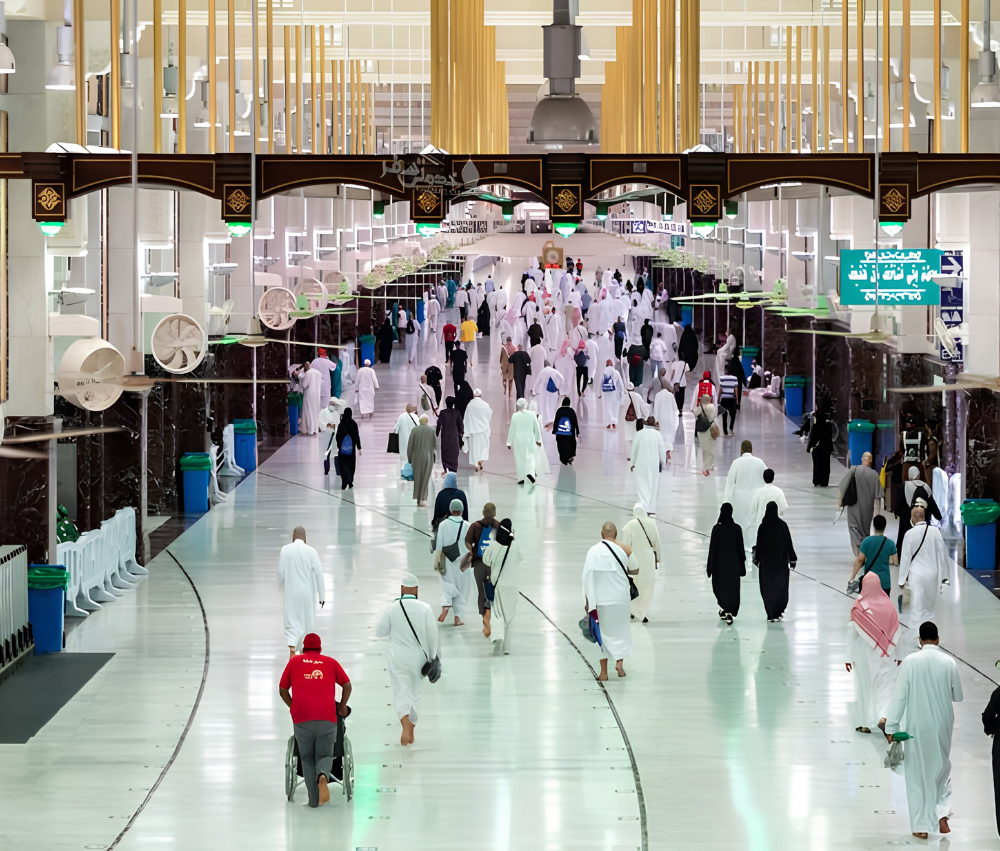
After completing Tawaf, make your way to Safa Hill, which is located in line with Hajar al-Aswad. Directional signs inside Masjid al-Haram will guide you.
As you approach Safa, it is Sunnah to recite:
إِنَّ الصَّفَا وَالْمَرْوَةَ مِن شَعَائِرِ اللَّهِ
Inna as-Safa wal-Marwata min Sha’a’irillah.
Translation:
“Indeed, Safa and Marwa are among the symbols of Allah.” (Surah Al-Baqarah 2:158)
Then say:
أَبْدَأُ بِمَا بَدَأَ اللَّهُ بِهِ
Abda’u bima bada’Allahu bih.
Translation:
“I begin with that which Allah has begun.”
Dua at Safa
When you reach Safa, face the direction of the Holy Kaaba, raise your hands and begin making Dua.
It is Sunnah to recite:
اللَّهُ أَكْبَرُ، اللَّهُ أَكْبَرُ، اللَّهُ أَكْبَرُ، وَلِلَّهِ الْحَمْدُ
Allahu Akbar, Allahu Akbar, Allahu Akbar, wa lillahil hamd.
Then recite:
There is no deity worthy of worship except Allah alone. He has no partner. To Him belongs all sovereignty and all praise. He gives life and causes death, and He has power over all things.
Then recite:
There is no deity except Allah alone. He fulfilled His promise, supported His servant, and defeated the confederates alone.
Repeat these supplications three times, making your own heartfelt Dua between each repetition, following the Sunnah of Prophet Muhammad ﷺ.
Proceed to Marwa
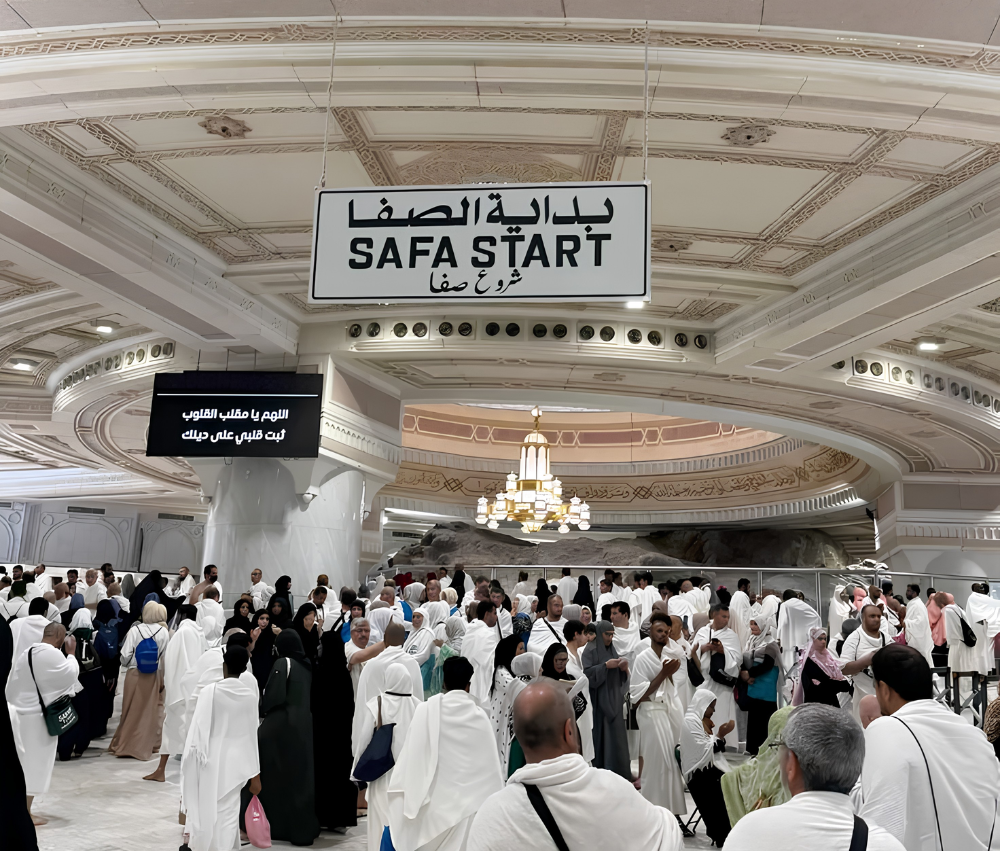
After completing your supplications at Safa, begin walking towards Marwa.
During the walk, you will notice two green lights marking the place where Hajar (AS) ran in search of water for her son Ismail (AS).
Sunnah for Men
Between the two green markers:
- Men should walk briskly or jog lightly if possible.
- Women should continue walking at a normal pace.
Dhikr and Dua During Sa’i
There is no fixed Dua or Dhikr prescribed specifically for Sa’i.
During your walk, you may:
- Recite the Qur’an.
- Make personal Duas.
- Remember Allah through Dhikr.
- Send abundant Salawat upon Prophet Muhammad ﷺ.
Use this blessed time to ask Allah ﷻ for forgiveness, guidance, health, and success in this life and the Hereafter.
Dua at Marwa
When you arrive at Marwa, face the Kaaba, raise your hands and repeat the same supplications that you recited at Safa.
Reaching Marwa completes one lap.
Returning from Marwa back to Safa counts as the second lap.
Continue this process until you complete seven laps, finishing your Sa’i at Marwa.
After Completing Sa’i
Once Sa’i is complete:
- Make a final heartfelt Dua.
- If possible, perform two Rak’ahs of Nafl Salah in Masjid al-Haram.
- Thank Allah ﷻ for giving you the opportunity to complete this important act of worship.
Leaving Masjid al-Haram
When leaving Masjid al-Haram, step out with your left foot and recite the Sunnah Dua for leaving the mosque.
Translation:“In the name of Allah. Peace and blessings be upon the Messenger of Allah. O Allah, I ask You from Your bounty.”
Leave the Haram with gratitude and continue remembering Allah ﷻ.
Halq or Taqsir
The final step of Umrah is either:
Halq (Shaving the Head)
For men, shaving the entire head is the most virtuous option and was highly recommended by Prophet Muhammad ﷺ.
Taqsir (Trimming the Hair)
If you do not wish to shave your head, trim the hair evenly from all parts of your head. A noticeable trim (approximately one inch or more) is generally recommended.
For Women
Women should cut only a small portion (about the length of a fingertip) from the ends of their hair.
After completing Halq or Taqsir, you leave the state of Ihram, and all Ihram restrictions come to an end.
Tip: Use a licensed barber in Makkah whenever possible, or trim your own hair if appropriate.
Begin Your Blessed Umrah Journey with Confidence
Let KaabaConnect handle the planning while you focus on your worship. Enjoy comfortable accommodations, reliable transportation, and dedicated support every step of the way.